
Digital Skills and Language Education for Sustainable Tourism
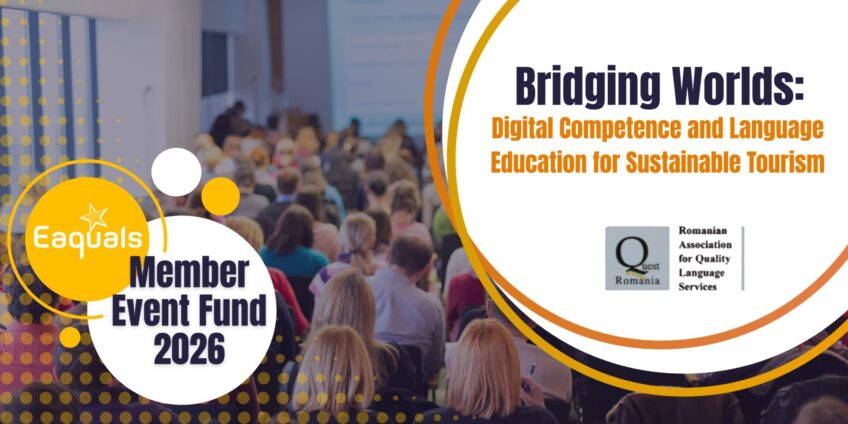
Bridging Worlds: Exploring the Future of Tourism Education
Eaquals Associate Member Quest Romania organised this event with support from the Eaquals Member Event Fund.
The international conference Bridging Worlds: Digital Competence and Language Education for Sustainable Tourism took place on 20–21 March 2026 in a hybrid format, bringing together 75 participants online and in Cluj-Napoca, Romania.
At first glance, the conference focused on three distinct areas: language education, digital competence and sustainable tourism.
However, in practice, the discussions revealed how closely connected these fields have become.
Today’s learners are preparing for a tourism sector shaped by digital platforms, multilingual communication and new technologies. As a result, educators face a growing challenge. How can language teaching remain relevant? How can it help learners develop the skills they need for modern professional environments?
Therefore, this question sat at the heart of the conference.
Why Digital Competence and Language Education for Sustainable Tourism Matters
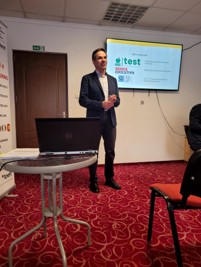 Across presentations, workshops and discussions, participants explored how digital tools can support communication, collaboration and problem-solving in language learning. Rather than focusing on technology itself, speakers examined how digital competence can be integrated into meaningful learning experiences that reflect real-world contexts.
Speakers gave particular attention to task-based learning and CLIL approaches. For educators working in tourism-related contexts, these methodologies offer practical ways to connect language development with professional communication and intercultural awareness.
Exploring New Approaches to Teaching and Learning
In addition, a recurring theme was the role of artificial intelligence in education. Discussions moved beyond
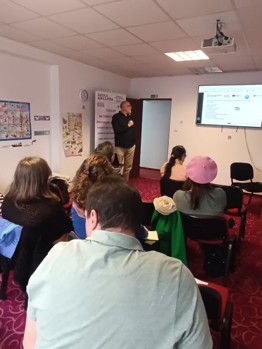
whether educators should use AI and focused instead on how educators can use it responsibly, critically and effectively. Participants explored ways to incorporate AI into teaching while maintaining learner engagement, creativity and independent thinking.
From Ideas to Classroom Practice
Equally important, one of the strengths of the conference was its emphasis on application. Attendees did not simply explore new ideas; they had opportunities to explore how these approaches could work in their own classrooms and training environments.
This practical focus helped many participants build confidence in using digital tools and adapting their teaching to emerging educational realities.
Building Collaboration Across the Education Sector
 Moreover, the event created space for meaningful collaboration between teachers, trainers, researchers and institutions. Conversations throughout the conference highlighted a shared recognition. The future of education requires stronger connections between language learning, digital competence and sector-specific skills.
Looking ahead, as education and tourism continue to evolve, events such as Bridging Worlds provide an important opportunity to examine what learners need next and how educators can respond.
Looking Ahead
The conference demonstrated that preparing learners for the future is no longer only about teaching a language or mastering a digital tool. It is about helping individuals communicate, adapt and thrive in increasingly connected and technology-rich environments.
Frequently Asked Questions
What was the Bridging Worlds conference about?
The conference explored the relationship between digital competence, language education and sustainable tourism, focusing on practical approaches that educators can apply in their teaching and training contexts.
Who organised the Bridging Worlds conference?
The event was organised by Eaquals Associate Member Quest Romania and was supported by the Eaquals Member Event Fund.
When and where did the conference take place?
The conference took place on 20–21 March 2026 in a hybrid format, both online and in Cluj-Napoca, Romania.
Who attended the event?
The conference brought together 75 participants, including teachers, teacher trainers, university staff, researchers and language education professionals.
What topics were discussed during the conference?
Key topics included digital competence, language education, artificial intelligence in teaching, task-based learning, CLIL methodologies and sustainable tourism.
Why is digital competence important for language education?
Digital competence helps learners and educators navigate modern communication environments, use technology effectively and develop skills that are increasingly relevant in education and the workplace.
How does language education support sustainable tourism?
Language education helps learners develop communication, intercultural and professional skills that are essential for working in international and tourism-related contexts.